Your Guide to Choosing and Using a Premium Floral Clipart Set
Working with floral imagery can transform a simple project into something vibrant and engaging. Whether you’re designing a wedding invitation, a blog header, or a product label, the right botanical elements bring a touch of nature’s elegance to your work. A high-quality Floral Clipart Set is more than just a collection of pretty pictures; it’s a versatile toolkit for creators. But the process of selecting and implementing these assets is where many well-intentioned projects can veer off course. Understanding what you’re really getting, and how to use it effectively, separates a frustrating experience from a seamless, professional one.
Beyond the Pretty Pictures: What a Complete Set Actually Means
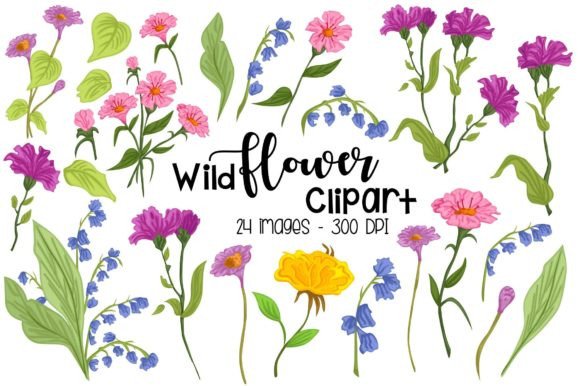
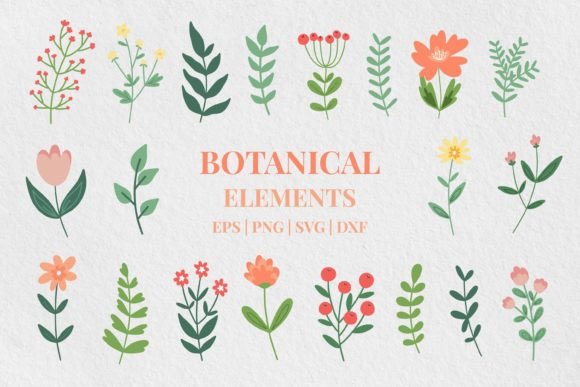
Many designers and hobbyists look at a Floral Clipart Set and think primarily about style—roses, daisies, wreaths, leaves. That’s a natural starting point, but it’s a common oversight to focus solely on aesthetics while missing the technical specifications that dictate real-world usability. When a set promises 24 PNGs, an EPS, an SVG, and a DXF file at 4000x4000 pixels and 300DPI, those numbers aren’t just jargon. They represent flexibility. The PNGs with transparent backgrounds are your ready-to-use, high-resolution staples for digital projects and mockups. The EPS vector file is the cornerstone for professional, scalable print design—logos, large format signage, anything that needs to resize perfectly. The SVG is crucial for web designers and developers needing scalable graphics for sites and apps, while the DXF can be a gateway for CNC routing or engraving projects.
A frequent mistake is downloading a set and immediately using the first PNG you like without considering the project’s final medium. Using a PNG for a logo that will later need to be blown up for a storefront sign leads to pixelation and costly redesigns. The corrective advice is simple: match the file format to the project’s purpose from the start. Before you even place a flower on your canvas, ask yourself: Is this for web, for high-end print, for physical fabrication, or all of the above? A comprehensive set like this is designed to answer “all of the above,” but you must consciously choose the right tool from the toolbox.
The High-Resolution Trap: When Size Doesn’t Equal Efficiency
Receiving 4000x4000 pixel files feels reassuring; it screams “professional quality.” However, another common misunderstanding is treating these massive files as your everyday working files. Opening several 4000px PNGs in a standard design program can slow your system to a crawl, draining productivity and creative flow. The mistake here is operational: assuming you must work directly with the originals at all times.
A better approach is to establish a smart file management workflow. Keep the original download folder as your pristine master archive. When beginning a project, create a dedicated project folder and copy only the specific floral elements you need. For initial layout and composition, consider creating smaller, optimized versions for speed. The true power of the high resolution comes at the final export stage. When you’re ready to output your finished design—whether it’s a website banner or a print-ready PDF—you then link back to or replace your placeholders with the original high-res assets. This balances efficiency with final quality, preventing your creative software from becoming bogged down by unnecessary data.
Vector vs. Raster: The Overlooked Lifeline for Scalability
The inclusion of both raster (PNG) and vector (EPS, SVG) files in a Floral Clipart Set is its greatest strength, yet it’s a feature many beginners undervalue. The misunderstanding stems from a lack of clarity on what “scalable” truly means. A raster image, like a PNG, is made of pixels. Enlarging it beyond its intended resolution means those pixels get stretched, resulting in a blurry, unusable image. A vector file, on the other hand, defines shapes with mathematical paths. You can scale a vector rose from a thumbnail to a billboard size without any loss of quality.
This has direct effects on cost and satisfaction. Imagine designing a beautiful floral logo for your new business using only the PNGs. It looks perfect on your website. But when you go to print business cards and, later, a large banner for an event, the quality deteriorates. You’re faced with either accepting a poor-quality print or paying a designer to recreate your logo from scratch. The practical advice is to always start foundational branding elements with the vector files. Use the PNGs for mockups, social media posts, or digital compositions where extreme scaling isn’t required. For any element that might represent your brand across multiple sizes and mediums—a logo, a recurring badge, a mascot—build it from the EPS or SVG file. This safeguards your future.
Transparency and Composition: Avoiding Clunky Overlays
The promise of a “transparent background” is a key selling point for any Floral Clipart Set. It allows you to place flowers seamlessly over other elements. However, the mistake occurs when users don’t respect the complexity of the clipart itself. A detailed, lush floral wreath with many leaves and petals still has a specific silhouette. Placing it over a busy, patterned background with contrasting colors can make the edges look jagged or the composition feel chaotic, even with transparency.
The corrective action is to practice thoughtful layering and background selection. Use these transparent assets over solid colors or subtly textured backgrounds initially to ensure clarity. Pay attention to the natural negative space within the floral design itself; a bouquet might have an open center perfect for framing text. Before finalizing, zoom in and check the edges of your overlay on a contrasting temporary background to ensure the transparency is clean. This small step prevents the disappointment of a final product where your beautiful florals look awkwardly pasted on.
Buying Blind: What to Check Before You Download
The decision to purchase or download a Floral Clipart Set should be informed, not impulsive. Many consumers overlook the necessity of reviewing a detailed license or checking for real sample applications. A set might look gorgeous in the promotional images, but does it include the individual components you need? Can you see a preview of all 24 elements? Is the license clear about commercial use, allowing you to use the graphics for products you sell?
Before committing, you should actively look for or request:
- A full list or preview of every included floral element (roses, single leaves, wreaths, bouquets, etc.).
- Clear license terms regarding personal and commercial projects.
- Examples of the files in use, especially showing scale (e.g., a logo sized small and large).
- Technical support or documentation on how to access and use different file formats like the DXF.
This due diligence ensures the set aligns with your project goals and legal requirements. It turns a hopeful download into a confident asset acquisition.
A Balanced Approach to Creative Flourishing
Ultimately, a premium Floral Clipart Set is a powerful resource. The pitfalls discussed aren’t meant to deter you, but to equip you. By understanding the distinct role of each file format, managing your high-res files intelligently, leveraging vectors for scalability, composing with transparency thoughtfully, and verifying the details before you buy, you move from being a passive user to an empowered creator. Your projects benefit not just from the beauty of the florals, but from the technical integrity and professional finish that proper usage guarantees. Let the flowers enhance your work, without the hidden thorns of unforeseen limitations.