Hand Drawn Floral Corner Frame Borders: A Practical Asset for Modern Creators
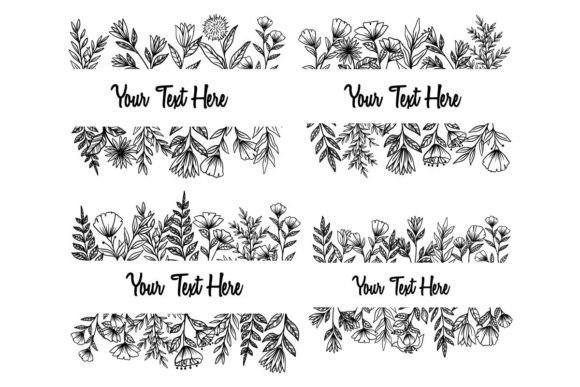
In the workflow of a contemporary creator, whether a marketer designing a brochure, a blogger crafting a newsletter, or a small business owner preparing a menu, the need for elegant, ready-to-use decorative elements is constant. The Hand Drawn Floral Corner Frame Border, isolated on a clean white background in formats like EPS and JPG, is precisely this kind of asset. It is not merely a static image but a versatile graphic component designed for integration. At its core, it is a hand-drawn ornament, typically a delicate floral motif placed in a corner, that acts as a visual anchor or frame for other content. Its isolated nature means it arrives without background distractions, ready to be placed into your project with minimal effort.
Understanding the Role in a Creative Process
Where does this specific asset fit? It exists within the broader process of visual design and content enhancement. This process often begins with core content creation—writing text, compiling images, structuring information—and then proceeds to the aesthetic layer where tone, brand identity, and visual appeal are applied. The Hand Drawn Floral Corner Frame Border belongs to this second, crucial phase. It is a tool for adding polish and a tailored human touch to digital work. Unlike generic, automated borders, its hand-drawn quality conveys warmth, authenticity, and craftsmanship, aligning with brands or projects that value a personal, artisanal, or elegant feel.
Consider its use before a project's final assembly. A designer might select this border asset early in the mood-boarding or style guide phase, establishing a visual direction. Its selection influences other decisions, such as color palette choices that complement the floral hues or font selections that match its delicate lines. Alternatively, it can be employed during the layout process as a recurring motif to unify different sections of a document or website. Finally, its application can happen after the main content is locked, serving as a finishing touch to elevate a layout that feels too stark or digital.
Integration with Tools and Platforms
The practical value of an isolated EPS and JPG file lies in its compatibility. The EPS (Encapsulated PostScript) format is vector-based, making it scalable without loss of quality—ideal for print workflows like InDesign brochures or large format posters. The JPG provides a ready-to-use raster image perfect for digital platforms. This dual-format approach means the asset interacts smoothly with a suite of standard tools:
- Graphic Design Software: Adobe Illustrator, Photoshop, or free alternatives like Affinity Designer or Canva.
- Document Layout Programs: Microsoft Word, Google Docs, or Adobe InDesign for incorporating borders into page designs.
- Web & Digital Platforms: Website builders (WordPress, Squarespace), email marketing services (Mailchimp), or social media graphic creators.
This compatibility removes technical barriers. A user can drag the JPG into a Canva template to frame a blog post header or import the EPS into Illustrator to resize it for a booklet’s corner without worrying about pixelation. The isolation on white is key; it allows for easy blending via transparency tools or simple layer masking, letting the floral ornament overlay seamlessly onto colored backgrounds or photographic images.
Practical Implementation and Workflow Examples
Integrating a Hand Drawn Floral Corner Frame Border effectively requires a blend of artistic judgment and organizational habit. Here are practical ways to deploy it across different scenarios.
For a freelancer or blogger, consistency across publications builds brand recognition. One might establish a template where the same floral corner border, perhaps slightly recolored, appears on every PDF lead magnet or at the top of each newsletter. This creates a signature look without requiring custom illustration each time. The asset is stored in a dedicated "Brand Assets" folder alongside logos and fonts, making it a repeatable step in the publication workflow.
In a small business marketing workflow, such as a cafe or boutique, the border can transform functional documents into branded experiences. A simple PDF price list or event flyer gains perceived value when framed with a delicate, hand-drawn floral element. The implementation is straightforward: the designer places the border asset in the master template file for all promotional materials. This ensures efficiency and quality control—every output maintains a consistent, professional aesthetic, saving time from searching for new decorations for every project.
Educators and content creators find use in enhancing learning materials or presentation slides. A floral corner can soften the look of a dense worksheet or mark the section headers in an online course PDF, improving usability and visual organization. It interacts here with the decision to make content more engaging and less intimidating. The key is subtlety; the ornament should enhance, not overwhelm, the primary information.
Tips for Smooth Integration and Long-Term Use
To make this asset a sustainable part of your toolkit, consider these factors:
- Preparation: Upon acquiring the files, immediately organize them. Rename them clearly (e.g., “Floral-Corner-Border_EPS”) and store them in your cloud or local asset library where your team or future self can find them.
- Adaptation: Don't use the asset in its default state every time. Use your software’s color adjustment tools to match it to different project palettes. Consider flipping or rotating it to create variation while maintaining the core style.
- Layering and Composition: Remember its role as a frame. It often works best placed in a corner or along a margin, leaving ample clear space for your core text or imagery. Experiment with opacity to make it a subtle watermark effect on stationery.
- Consistency vs. Freshness: For long-term projects like a serialized blog or product line, using the same border builds consistency. For a one-off event or unique campaign, it might be used more prominently as a central theme. Balance its use to avoid becoming predictable.
The hand-drawn characteristic is its greatest strength but also demands thoughtful pairing. It naturally complements other handmade elements, like script fonts or watercolor textures, within a design. Conversely, it might clash with stark, ultra-modern tech graphics unless used intentionally for contrast.
Observing Outcomes and Strategic Value
Beyond immediate aesthetics, the strategic use of a well-chosen decorative border like this influences outcomes. In marketing materials, it can elevate perceived quality, making a brochure feel less like a mass-produced leaflet and more like a curated artifact. This can affect customer engagement and retention. For personal projects or hobbies, such as crafting a wedding planner or a personal journal, the asset speeds up the beautification process, allowing the creator to focus on content rather than spending hours drawing margins.
Its value is also in time efficiency. For a productivity-minded user, the minutes saved by not having to sketch a custom corner for every project accumulate. This asset becomes a pre-approved solution, reducing decision fatigue in the visual enhancement stage of a workflow. It serves as a bridge between raw output and polished final product, a small but significant step in the process that ensures a consistent level of finish.
Ultimately, the Hand Drawn Floral Corner Frame Border is a modular component for creative assembly. It fits into the real-world process where professionals and hobbyists alike seek to add character and cohesion to their outputs without reinventing the wheel each time. By understanding its formats, its compatibility with common tools, and its potential applications across various stages of project development, you can integrate it smoothly to enhance not just individual pieces, but your entire approach to producing visually compelling work.